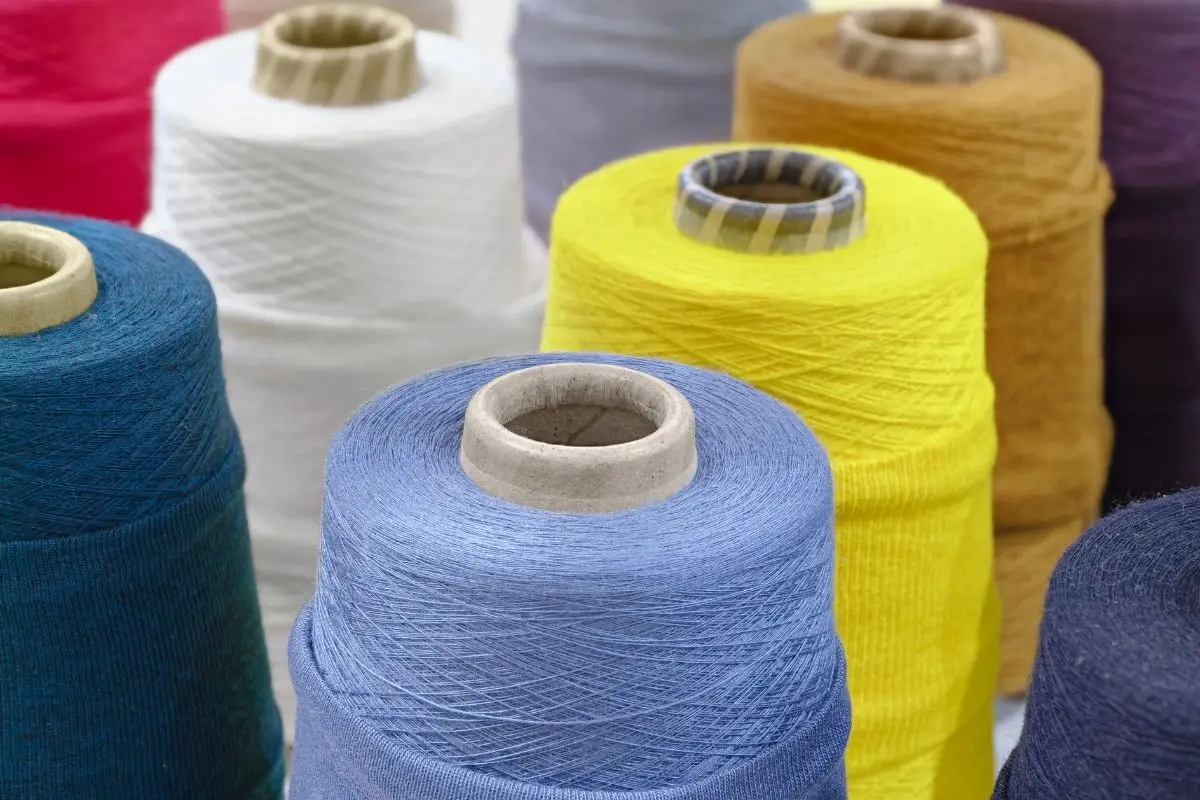

Nylon yarn product features offer a wide range of uses in the textile industry. It also provides long-lasting performance thanks to its high strength. Therefore, it is frequently preferred in products that require durability. In this way, the duration of use of textile products increases. In addition, nylon yarns offer comfort with their light structure. In this case, it is widely used in sportswear and underwear. Therefore, flexibility and form retention are important. In addition, it dries quickly as it has low moisture absorption. In this way, it provides an advantage in the production of functional clothing. Therefore, products suitable for active lifestyles can be developed. It also shows high resistance to chemicals. In this case, it is suitable for industrial use. Therefore, it also finds a place in ropes, nets and technical textiles. Furthermore, its heat resistance is limited. In this way, deformation can be observed at high temperatures. Therefore, care should be taken when determining areas of use. Also, its glossy surface gives an aesthetic appearance.
Table of Contents
Nylon Yarn Types

Nylon yarn types offer different properties according to the intended use. It is also divided into two main groups as filament and textured yarn. Therefore, each of them has different performance characteristics. In this way, customized solutions can be produced for the needs of the sectors. In addition, flat filament yarns are smooth and shiny. In this case, they are frequently preferred in aesthetic textile products. Therefore, it is widely used in the production of underwear and socks. Also, texturized nylon yarns are flexible and soft. In this way, it provides advantages in the production of sportswear and swimwear. Therefore, products that adapt to the body can be designed. There are also types such as nylon 6 and nylon 6.6. In this case, each type offers different levels of strength and flexibility. Therefore, the right choice is important in applications that require strength. They also have a high capacity to absorb color.
Nylon Yarn and Polyester Difference

Nylon yarn and polyester have important differences between synthetic fibers. In addition, both materials offer different properties. Therefore, their areas of use diverge. In this way, choosing the right material affects product performance. Furthermore, nylon yarn has a higher elasticity. In this case, it is widely used in sportswear and underwear. Therefore, it adapts better to body movements. Furthermore, polyester yarn absorbs less water. In this way, it is preferred in outerwear products. Therefore, it is more durable in humid environments. Furthermore, nylon yarn has a smoother surface. In this case, shiny and slippery textures are obtained. Therefore, it stands out in products that require aesthetics and elegance. Furthermore, polyester is more durable and resistant to UV rays. In this way, it offers advantages in products exposed to the sun.
Nylon Yarn Production Process

The nylon yarn production process starts with chemical reactions and continues with technical steps. Also, the polymerization process is of great importance in this process. Therefore, the monomers used as raw materials are combined. In this case, long polymer chains are formed. Furthermore, the polymer is liquefied and converted into yarn form. For this reason, the melt spinning method is applied. In this way, nylon yarns are obtained in the desired fineness. In addition, the yarns are cooled and solidified. In this case, strength and flexibility are gained. In addition, the durability of the yarn is increased by the stretching process. Therefore, products with high breaking strength are obtained. In addition, the form of the yarns is improved by applying twisting process. In this case, properties suitable for the field of use are provided. In addition, dyeing and finishing processes are carried out. In this way, the yarns are prepared for end use. Therefore, they become directly usable in textile products.
Nylon Yarn Durability
Nylon yarn durability is an important factor in its preference in the textile industry. It also offers high tensile strength. Therefore, it retains its form even under heavy use. In this case, it is possible to develop long-lasting products. It is also resistant to tears with its elastic structure. Therefore, it is frequently used in sports and outerwear products. It also has low moisture absorbing properties. In this case, the risk of mold and deformation is reduced. It is also highly resistant to chemicals. Therefore, it is preferred in industrial and technical textiles. In addition, its resistance to friction is quite high. In this case, the abrasion rate is minimized. Also, its heat resistance is at medium level. Therefore, attention should be paid to production and usage conditions. Also, protective treatments against UV rays may be required.

Conclusion
As a result, Nylon Yarn Product Properties offer significant advantages in the textile industry. In addition, it is preferred in many areas with its features such as high durability and flexibility. Therefore, it has a wide range of uses from sportswear to industrial textiles. In addition, its resistance to water and chemicals ensures long life. In this case, it also contributes to sustainable production targets. Furthermore, thanks to Nylon Yarn Product Characteristics, quality and performance-oriented products can be developed. Therefore, manufacturers can increase productivity with the right yarn choices.
Frequently Asked Questions
How is yarn strength measured? It is measured by determining the breaking strength with tensile tests.
What is the most distinctive feature of nylon yarn? It has high flexibility and durability.
Where is nylon yarn used? It is widely used in sportswear, underwear, industrial textiles.
What is the difference between filament yarn and staple fiber yarn? Filament yarns are continuous, staple fiber yarns consist of short fibers.
What are the types of nylon yarn? There are varieties such as Nylon 6, Nylon 6.6 and texturized nylon.
How is nylon yarn produced? It is produced by melting polyamides into fibers.
What does yarn count mean? It is a technical measurement indicating the thickness or thinness of the yarn.
What is the environmental impact of nylon yarn? It is difficult to biodegrade; its impact can be reduced by recycling.
What is textured yarn? It is a synthetic yarn with a volumized, crimped structure.
Is nylon yarn easy to dye? Yes, bright and vivid colors are obtained thanks to good dye retention.